✍️ By Debbie Balfour | Langley News | June 25, 2026

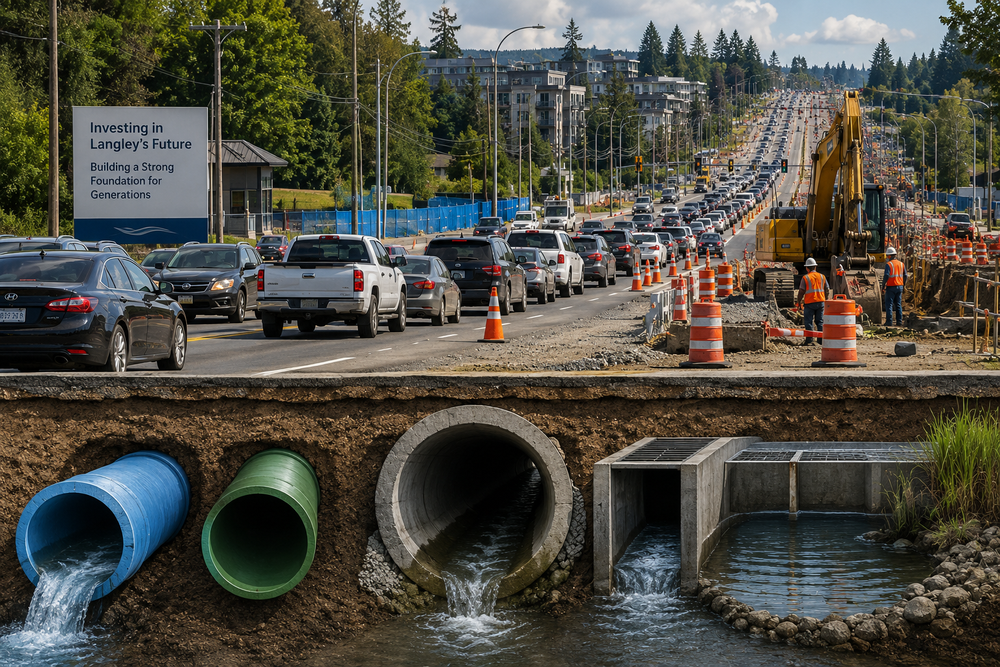
When people think about major infrastructure projects in Langley, they usually picture road widening projects, new bridges, or the Surrey-Langley SkyTrain. These are the projects residents can see every day and the ones that often dominate public discussion.

Yet some of the most important investments shaping Langley's future are hidden entirely from view.

Beneath roads, neighbourhoods, and commercial districts lies a vast network of water, wastewater, and stormwater infrastructure that quietly supports daily life. While projects such as water system upgrades, wastewater capacity expansions, watermain replacement programs, storm sewer improvements, and stormwater detention facilities rarely make headlines, they may have a greater long-term impact on Langley's growth and sustainability than many of the projects that attract public attention.

Simply put, communities cannot grow without them.

As Langley's population continues to expand, the demand for reliable water and sewer services increases. New housing developments require sufficient water capacity and wastewater infrastructure before construction can proceed. Without these investments, development approvals can slow, growth can become constrained, and existing systems can face increasing pressure.

Water system upgrades, including booster stations and transmission improvements, help maintain water pressure and service reliability as Langley grows. Watermain replacement programs help ensure aging infrastructure continues to function safely and efficiently. Storm sewer upgrades and stormwater detention facilities help manage rainfall and reduce flooding risks, while wastewater system capacity expansions are essential for accommodating future population growth.

The importance of these projects extends beyond supporting development.

They also provide significant environmental benefits.

Modern wastewater treatment systems help reduce contaminants entering local waterways. Improved stormwater management can protect streams and aquatic habitats from erosion and pollution. Upgraded drainage systems reduce flood risks during increasingly intense weather events, while enhanced water infrastructure improves community resilience during droughts and emergencies.

For future generations, these investments help preserve environmental quality while supporting responsible growth.

However, these projects also present a unique challenge.

Unlike a new recreation centre, transit station, or roadway, water and sewer infrastructure remains largely invisible. Residents rarely interact directly with treatment facilities, underground pipes, or stormwater systems unless something goes wrong.

As a result, municipalities often face difficult questions when proposing hundreds of millions of dollars in infrastructure spending.

Supporters argue these investments are among the most important responsibilities of local government. They believe proactive planning protects public health, supports economic growth, prevents costly failures, and ensures environmental compliance. Waiting until systems become overloaded or fail entirely would likely create far greater costs and disruption.

Critics raise legitimate concerns as well. Infrastructure projects can be expensive, often requiring borrowing, utility rate increases, development cost charges, or long-term financial commitments. Some residents question whether growth-related infrastructure costs are being fairly distributed and whether municipalities are managing expansion at a sustainable pace.

Major infrastructure investments can impact property values, development opportunities, and municipal regulations. Having access to affordable legal advice can help homeowners, investors, and families make informed decisions.

SPONSORED

Major infrastructure investments can impact property values, development opportunities, and municipal regulations. Having access to affordable legal advice can help homeowners, investors, and families make informed decisions.

LegalShield provides affordable access to legal professionals who can help answer everyday legal questions before they become costly problems.

Learn more

The debate highlights a broader challenge facing many rapidly growing communities.

How do municipalities invest enough to support future growth without placing excessive financial burdens on current residents?

There are no simple answers.

What is clear is that water, sewer, and stormwater infrastructure form the foundation upon which every other community investment depends. Without sufficient underground infrastructure capacity, new housing and commercial development can be delayed or restricted, businesses cannot expand efficiently, and environmental protection goals become increasingly difficult to achieve.

Metro Vancouver's population is expected to continue growing over the coming decades, increasing pressure on water, wastewater, and stormwater systems throughout communities such as Langley. Planning for that growth requires infrastructure investments that often remain unseen but are essential to maintaining quality of life.

These projects may never receive the same attention as major transportation investments, but they help make every aspect of community growth possible.

And perhaps that leads to an important question:

If infrastructure is only noticed when it fails, are invisible projects like these actually some of the most valuable investments a municipality can make?


Debbie Balfour | Real Estate Investing Success Coach + Podcast Host
📍 Website: www.DebbieBalfour.com
📧 Email: Debbie@DebbieBalfour.com
🔗 LinkedIn: Debbie Balfour
▶️ YouTube Channel: youtube.com/@DebbieBalfour

Join the FREE Facebook Group: Real Estate Investor Success Hub

Download your FREE 7 Proven Ways To Invest In Real Estate Without Using Your Own Cash guide.

TAGS: #Langley Infrastructure #Water Management #Community Growth #Real Estate #Sustainability #Langley News #Debbie Balfour

Share this article
The link has been copied!