✍️ By Debbie Balfour | Langley News | May 26, 2026
As the cost of living continues climbing across British Columbia, Langley Township residents are now facing another financial reality: higher taxes, rising service costs, and growing debate over where municipal money should be spent.
Over the past several council meetings, a series of major fiscal decisions have quietly shaped what many homeowners, renters, and local organizations will soon feel directly in their wallets.
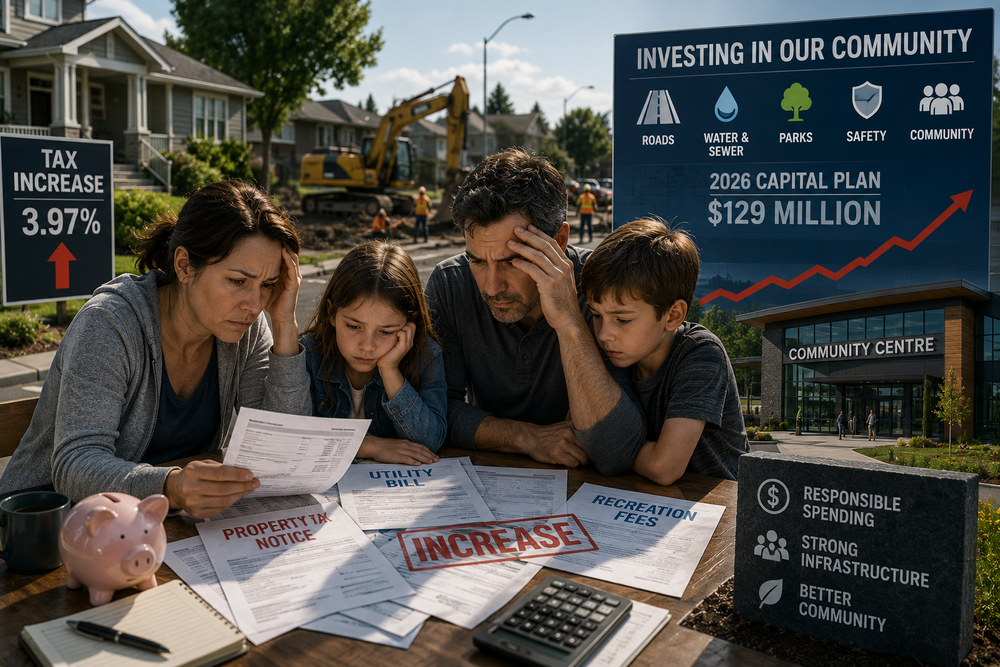
At the center of the discussion is the Township’s 2026 to 2030 Financial Plan, which locks in a 3.97 percent property tax increase alongside approximately $129 million in planned capital spending for 2026.
The spending package covers a broad list of infrastructure priorities including roads, drainage, sewer systems, waterworks, and parks.
Township officials argue the investments are necessary.
Langley is growing rapidly, infrastructure demands are increasing, and aging systems require upgrades to support both current residents and future development. Supporters of the financial plan say delaying projects today could create significantly larger costs tomorrow.
But many residents are expressing growing frustration.
Across community discussions, social media, and local conversations, taxpayers are increasingly questioning how much more households can realistically absorb while facing rising mortgage payments, rent increases, grocery inflation, and utility costs.
For some residents, the concern is not simply about the size of the increase. It is about cumulative pressure.
Many homeowners say annual increases that may appear manageable individually are becoming difficult when combined with broader affordability challenges affecting everyday life across the Fraser Valley.
At the same time, council recently approved updates to the Township’s Fees and Charges Bylaw covering transportation, waterworks, sewer, and stormwater services.
However, one notable rollback drew significant public attention.
Council voted to freeze Recreation, Arts and Culture fees at 2025 levels instead of allowing scheduled 2026 increases to proceed.
That decision appears to reflect growing sensitivity around affordability concerns for families already struggling with rising household expenses.
Community reaction to the fee freeze has largely been positive.
Parents, seniors, and local recreation users welcomed the move, arguing that access to sports, arts, and community programming should remain financially accessible during economically difficult times.
But not all spending decisions have escaped criticism.
Some residents are questioning whether the Township’s expanding list of infrastructure commitments and long term capital projects could eventually place even greater pressure on taxpayers in future years.
Others, however, see the spending differently.
Supporters point to visible infrastructure needs throughout Langley, including traffic congestion, drainage improvements, park expansion, pedestrian safety upgrades, and community facility investments. In their view, growth requires investment, and municipalities cannot continue delaying critical infrastructure projects indefinitely.
Council also approved several community grant adjustments and additional funding allocations for organizations including the Langley Seniors Resources Society, Volunteer Cancer Drivers, the Aldergrove Community Association, and the Langley Arts Council.
Those decisions received generally positive feedback, particularly from residents who value community support services and nonprofit programming.
Meanwhile, one quieter fiscal move may reveal council’s broader messaging around financial discipline.
On May 11, the council moved to cancel approximately $2.43 million in unused borrowing authority connected to the Culvert Infrastructure Loan Authorization Bylaw.
Supporters see the decision as a sign of fiscal restraint and responsible debt management. Critics worry it could also signal delayed infrastructure work that may eventually cost more later.
That tension now defines much of Langley’s budget conversation.
Residents want safer roads, better parks, stronger infrastructure, and improved community services. But they also want affordability, restraint, and reassurance that taxpayer dollars are being spent wisely.
And as economic uncertainty continues affecting households across the province, every new tax increase or fee adjustment is facing greater public scrutiny than ever before.
Because in today’s economy, municipal budgets are no longer just accounting documents.
They are becoming a direct reflection of how communities balance growth, priorities, and affordability under pressure.
Debbie Balfour | Real Estate Investing Success Coach + Podcast Host
📍 Website: www.DebbieBalfour.com
📧 Email: Debbie@DebbieBalfour.com
🔗 LinkedIn: Debbie Balfour
▶️ YouTube Channel: youtube.com/@DebbieBalfour
Join the FREE Facebook Group: Real Estate Investor Success Hub
Download your FREE 7 Proven Ways To Invest In Real Estate Without Using Your Own Cash guide.
TAGS: #Property Taxes #Municipal Budget #Community Spending #Cost of Living #Local Government #Langley BC #Langley News #Debbie Balfour