✍️ By Debbie Balfour | Langley News | May 30, 2026
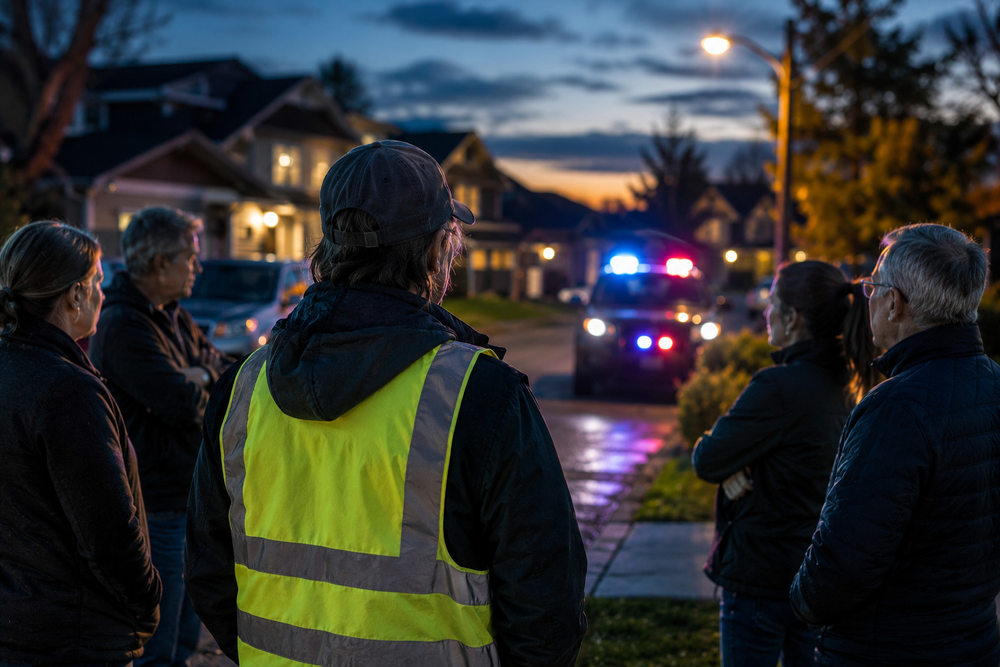
Increasingly, residents, business owners, strata councils, and volunteers are stepping into active roles themselves, helping create what many are calling a modern version of neighbourhood watch.
And unlike the old image of people peeking through curtains, today’s crime prevention network is far more organized, data driven, and community focused.
Behind the scenes, the Langley RCMP has quietly built a broad ecosystem of volunteer and prevention programs designed to tackle everything from property crime and speeding to commercial break ins and safety concerns in multi family housing.
The result is a growing partnership model where police and residents increasingly share responsibility for keeping communities safe.
At the heart of that effort is Block Watch.
The long running program allows neighbours in single family areas, apartments, and townhouse communities to organize, communicate suspicious activity, and work together to reduce break ins, vandalism, and auto crime. According to Langley RCMP information, organizing a Block Watch requires only about six hours a year.
That low barrier is part of the reason many residents are turning to it.
As concerns around property crime, package thefts, and suspicious activity continue dominating local social media discussions, residents are increasingly looking for practical ways to reconnect with neighbours and improve awareness on their own streets.
For others, volunteering goes much deeper.
Citizens Patrol volunteers work directly alongside RCMP initiatives by observing and reporting suspicious activity using radios and patrol equipment. The role requires formal screening, training, police information checks, and an ongoing monthly commitment.
Volunteers often become the additional eyes and ears police simply do not have the staffing capacity to provide full time.
And that matters in rapidly growing communities like Langley.
As population density increases and neighbourhoods expand, many residents say they are noticing changes in traffic, public disorder, theft, and safety concerns long before official statistics fully reflect them.
Traffic safety has also become a major focus.
The RCMP’s Speed Watch program specifically targets school zones, parks, and high complaint areas where speeding concerns continue frustrating families and residents. Volunteers collect traffic data while helping encourage safer driving behaviour.
For many parents, particularly near schools and busy suburban corridors, the issue feels personal.
The same is true in the business community.
Programs like Business Link allow local retailers and commercial property owners to receive crime alerts, request free security assessments, and strengthen communication directly with police.
In a time when break ins, shoplifting, and organized retail theft remain growing concerns across British Columbia, many business owners are prioritizing prevention strategies rather than waiting to become victims.
Perhaps one of the most important but least publicly discussed initiatives is Crime Free Multi Housing.
The program works with landlords, strata councils, and tenants to reduce illegal activity, drug related issues, nuisance behaviour, and safety concerns in rental and multi family properties.
As Langley continues adding more dense housing and apartment communities, programs like this are likely to become increasingly important.
And that may be the larger story unfolding across the region.
Community safety is evolving.
The old model, where residents simply expected police to solve every issue is shifting toward shared responsibility, prevention, and community involvement.
Supporters say that approach builds stronger neighbourhoods, improves communication, and reduces opportunities for crime before incidents happen.
Critics caution that volunteers should never replace properly funded policing resources.
But for many Langley residents, the motivation is simpler than politics.
They want to feel connected to their neighbourhoods again.
And in an era where public anxiety around crime often spreads faster than official statistics, many believe community involvement may be one of the few tools that still helps restore both safety and trust.
Debbie Balfour | Real Estate Investing Success Coach + Podcast Host
📍 Website: www.DebbieBalfour.com
📧 Email: Debbie@DebbieBalfour.com
🔗 LinkedIn: Debbie Balfour
▶️ YouTube Channel: youtube.com/@DebbieBalfour
Join the FREE Facebook Group: Real Estate Investor Success Hub
Download your FREE 7 Proven Ways To Invest In Real Estate Without Using Your Own Cash guide.
TAGS: #Community Safety #Neighbourhood Watch #RCMP #Crime Prevention #Public Safety #Langley BC #Langley News #Debbie Balfour