✍️ By Debbie Balfour | Langley News | May 29, 2026

If you ask many Langley residents how they feel about crime right now, the answer is often immediate.

People talk about rising thefts, social disorder, vehicle break ins, drug activity, and growing concerns about public safety across both the Township and the City.

But according to official crime statistics, the story is far more complicated.

Recent provincial and federal data suggest Langley’s measured crime trends are not rising in the dramatic way many residents believe. In fact, some of the most important indicators show significant long term improvement.

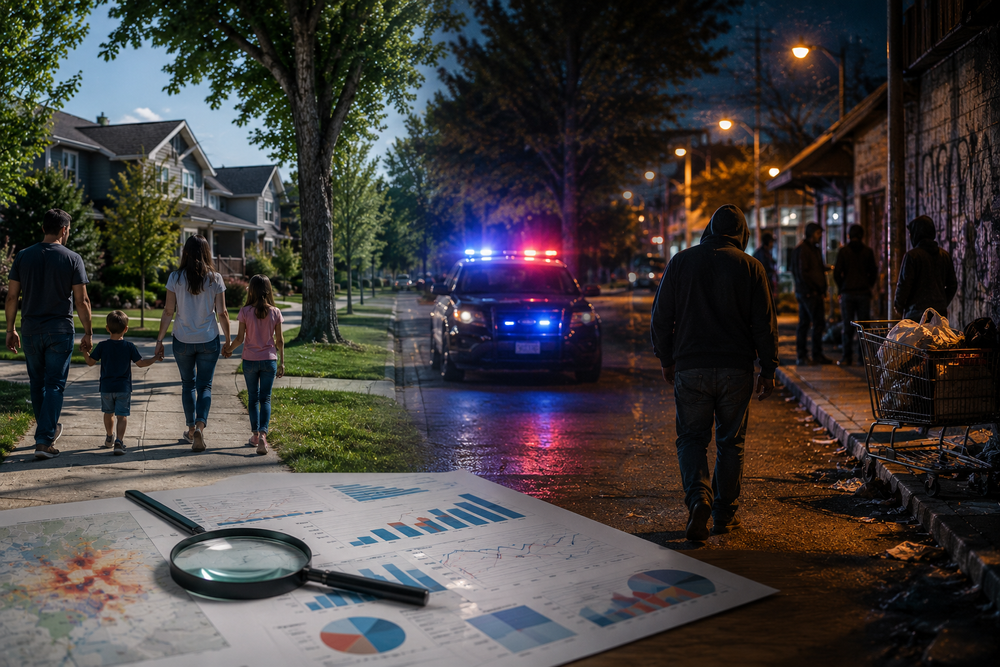
That disconnect between perception and measurable data is now becoming one of the most important public conversations unfolding across the community.

According to Statistics Canada data and BC government crime statistics tied to the Langley RCMP jurisdiction, overall crime trends and the Crime Severity Index have generally improved over the long term.

Langley City has publicly highlighted that its Crime Severity Index and overall crime rate are now at their lowest levels since 1998 after correcting historical data reporting issues that had temporarily distorted previous numbers.

The Crime Severity Index, often referred to as CSI, measures both the volume and seriousness of police reported crime. It is one of the primary tools used by governments, researchers, and municipalities to analyze public safety trends.

Local analysis released in 2025 by Langley City Mayor Nathan Pachal pointed to declining crime severity after years of volatility, particularly following adjustments to previously misclassified incidents that affected data between 2015 and 2022.

Violent crime trends, which had risen after 2014, have also reportedly been trending downward more recently according to the same analysis.

On paper, those numbers should reassure residents.

But perception rarely operates on statistics alone.

Across Langley, many residents continue expressing deep concerns about safety, particularly around property crime, visible drug activity, homelessness pressures, and social disorder in commercial and public areas.

That concern has increasingly shaped political discussions at the municipal level.

Recent public delegations to Township council involving gated community requests, public safety concerns, and toxic drug crisis discussions reveal growing public anxiety about neighbourhood security and quality of life.

And while official data may show improvement overall, residents often experience safety emotionally rather than statistically.

A single vehicle theft, public disturbance, or visible incident near a school or shopping area can have a far greater impact on public perception than broad long term trends buried inside annual reports.

Crime mapping tools further complicate the picture.

Langley City’s publicly available crime maps show neighbourhood level concentrations of reported incidents, helping residents visualize where crimes are occurring. These hotspot patterns often reinforce local concerns, particularly in areas near commercial corridors, transit hubs, or high traffic public spaces.

Meanwhile, regional comparisons with neighbouring communities like Surrey continue influencing perception as crime discussions spread across the Fraser Valley.

The RCMP and local governments have also expanded prevention strategies in response.

Programs such as Business Link, Citizens Patrol, Speed Watch, Block Watch, and Crime Prevention Through Environmental Design initiatives are all aimed at reducing opportunities for crime while improving communication between police, businesses, and residents.

Supporters say these programs are helping. Critics argue they reflect growing concern that traditional policing alone is no longer enough to maintain public confidence. And that may ultimately be the real issue Langley now faces.

The debate is no longer simply about whether crime is statistically rising or falling. It is about trust.

Do residents feel safe in their neighbourhoods? Do they believe institutions are being transparent? Do official statistics align with lived experience?

Because in today’s environment, perception itself has become politically powerful. And whether the numbers support it or not, fear can reshape communities just as strongly as crime itself.

Debbie Balfour | Real Estate Investing Success Coach + Podcast Host
📍 Website: www.DebbieBalfour.com
📧 Email: Debbie@DebbieBalfour.com
🔗 LinkedIn: Debbie Balfour
▶️ YouTube Channel: youtube.com/@DebbieBalfour

Join the FREE Facebook Group: Real Estate Investor Success Hub

Download your FREE 7 Proven Ways To Invest In Real Estate Without Using Your Own Cash guide.

TAGS: #Crime Statistics #Community Safety #Public Safety #Crime Perception #Local News #Langley BC #Langley News #Debbie Balfour

Share this article
The link has been copied!