✍️ By Debbie Balfour | Langley News | May 1, 2026

Just when it felt like every dollar was being stretched thinner, a bit of financial relief is finally on the horizon. Canadians are set to see a small break in their payroll deductions next year, and while it may not be massive, it’s meaningful.

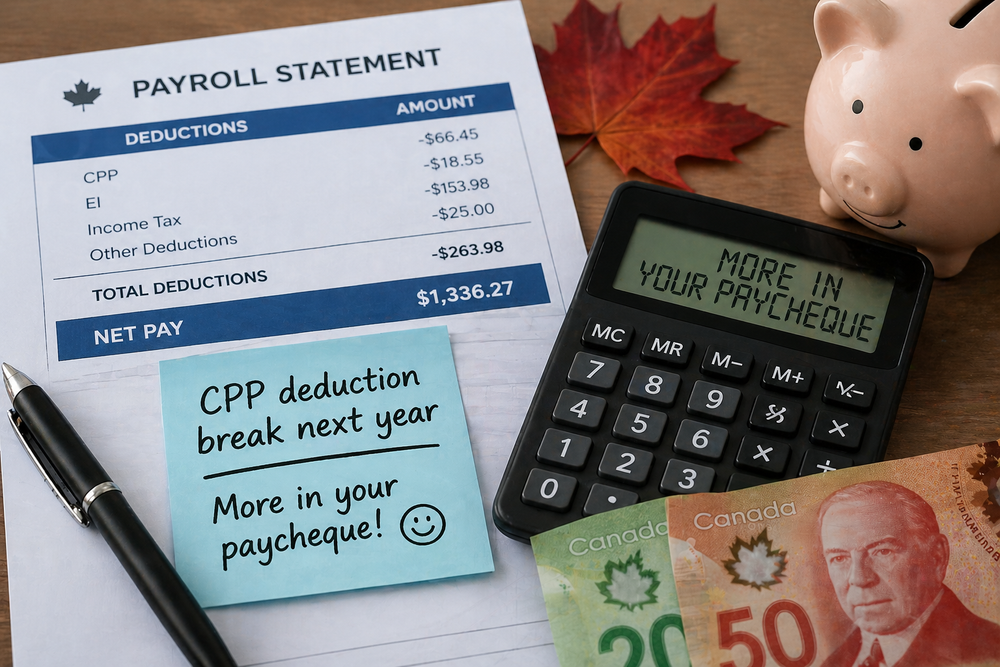
The adjustment comes from changes tied to the Canada Pension Plan (CPP), a cornerstone of retirement income for millions. After several years of incremental increases to CPP contributions, designed to strengthen future retirement benefits, 2027 is expected to bring a slight easing in how much is deducted from paycheques.

Here’s what that means in real terms.

For working Canadians, CPP contributions are automatically deducted from earnings up to a yearly maximum. Over the past few years, both the contribution rate and earnings ceiling have risen as part of a long-term enhancement plan. While that’s good news for future retirees, it has meant smaller net pay in the present.

Now, as that enhancement phase stabilizes, contribution increases are expected to level off. In some cases, workers may notice slightly lower deductions compared to prior projected increases, effectively putting a bit more money back into their pockets each pay period.

Let’s be clear, this isn’t a windfall.

Most Canadians won’t suddenly feel a dramatic boost in income. But in an environment where the cost of living remains high, from groceries to housing, even a modest increase in take-home pay can help ease monthly budgets.

And psychologically? It matters.

After years of rising costs and increasing deductions, even a small shift in the opposite direction can restore a sense of financial breathing room. It signals that not every change is about tightening the belt.

From a broader economic perspective, this adjustment could have a subtle ripple effect. More disposable income, even in small amounts, can lead to increased consumer spending. That benefits local businesses and contributes to overall economic activity.

For homeowners and real estate investors, this is another piece of the puzzle.

Affordability remains a key concern across Canada, especially in markets like British Columbia. Any increase in net income, however minor, can influence borrowing power, savings capacity, and overall confidence in making financial decisions—including entering the housing market.

But here’s the bigger picture.

CPP isn’t just about today, it’s about tomorrow. The previous increases were designed to ensure Canadians have higher, more reliable incomes in retirement. This temporary relief doesn’t undo that progress, it simply reflects the system reaching a more balanced phase.

So yes, your paycheque might look a little better next year.

And while it won’t change everything overnight, it’s a step in the right direction—a reminder that even small financial wins count.

Because sometimes, it’s not about a big break.

It’s about finally catching one.


Debbie Balfour | Real Estate Investing Success Coach + Podcast Host
📍 Website: www.DebbieBalfour.com
📧 Email: Debbie@DebbieBalfour.com
🔗 LinkedIn: Debbie Balfour
▶️ YouTube Channel: youtube.com/@DebbieBalfour

Join the FREE Facebook Group: Real Estate Investor Success Hub

Download your FREE 7 Proven Ways To Invest In Real Estate Without Using Your Own Cash guide.

TAGS: #Canada Finance #CPP Updates #Personal Finance #Canada Economy #Paycheck Relief #Retirement Planning #Langley News #Debbie Balfour

Share this article
The link has been copied!