By Jenny Holly Hansen | Langley News | March 20, 2026

For many business owners, insurance feels like a checkbox—something you’re told you need, something you pay for, and something you hope you never have to use. But here’s the problem: too often, a policy is put in place without a real conversation. There’s no context, no clarity, and no real understanding of how it actually protects your business when something goes wrong. As a result, many business owners are left exposed without even realizing it.

At its core, most business insurance policies are built from a handful of key coverages. Once you understand these, everything starts to make more sense. You can ask better questions, identify gaps, and make decisions that actually align with how your business operates.

Property Insurance

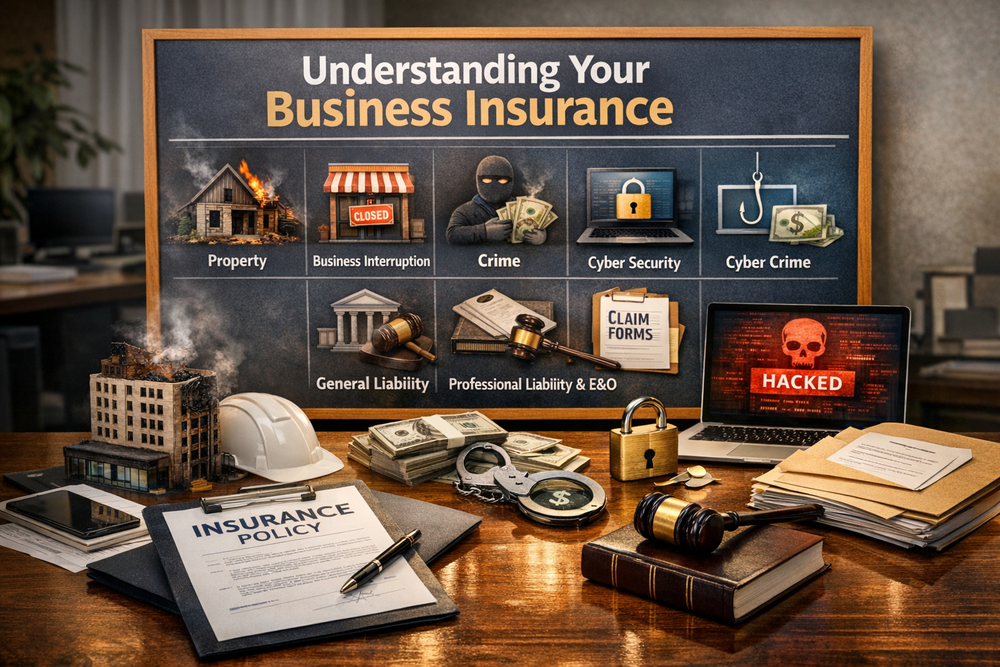
Property insurance is the foundation. It protects the physical assets you’ve worked hard to build—your building if you own it, along with equipment, inventory, furniture, and improvements you’ve made to your space. If there’s a fire or another insured loss, this is the coverage that helps repair or replace what’s been damaged. However, many business owners are caught off guard when values are underestimated or when coverage doesn’t reflect the true cost of rebuilding in today’s market. In some cases, certain risks like flooding or earthquakes may not even be included unless specifically added.

Business Interruption

Closely tied to this is business interruption insurance, which is often misunderstood but critically important. While property insurance repairs the damage, business interruption insurance supports your business while it recovers. If you’re forced to shut down due to an insured loss, this coverage helps replace lost income and pay ongoing expenses like rent, payroll, and loan obligations. Without it, even a temporary closure can create long-term financial strain. Unfortunately, coverage limits and timelines are often set without fully understanding how long recovery might realistically take.

Crime Coverage

Crime insurance addresses a very different kind of risk—financial loss due to theft, fraud, or dishonesty. This can include employee theft, forged cheques, or increasingly common social engineering scams where someone manipulates your team into transferring funds. While many policies include some level of crime coverage, it is often limited and may not reflect the sophistication of today’s threats. It’s an uncomfortable reality, but some of the most damaging losses come from within an organization or from highly convincing external fraud.

Cyber Security

As businesses become more digital, cyber security coverage has become essential. This type of insurance helps your business respond to incidents like data breaches, ransomware attacks, or system shutdowns. It typically covers the cost of IT investigations, legal support, customer notifications, and even reputation management. What many business owners don’t realize is that you don’t need to be a technology company to be at risk. If you store client information, use email, or rely on digital systems in any way, you have exposure.

Cyber Crime

Closely related, but often confused, is cyber crime coverage. While cyber security focuses on managing and recovering from a breach, cyber crime coverage deals specifically with financial loss. For example, if a fraudster impersonates a vendor and tricks your team into wiring money, or if payment instructions are altered through a compromised email account, this is the coverage that may respond. Many business owners assume these scenarios are covered under cyber policies, but that’s not always the case.

General Liability

General liability insurance is another core component, designed to protect your business if you are held responsible for bodily injury or property damage to others. Whether it’s a customer slipping on your premises or your operations causing damage to another business, this coverage helps with legal defense costs and potential settlements. Even relatively small incidents can lead to significant financial consequences, making this an essential layer of protection.

For businesses that provide advice, services, or specialized expertise, professional liability—also known as errors and omissions insurance—is equally important. This coverage protects against claims that your work caused financial harm due to an error, omission, or failure to deliver as expected. Even if you’ve done everything right, the cost of defending a claim can be substantial. In industries where trust and expertise are central, this coverage becomes a critical safeguard.

When you step back and look at the full picture, most business insurance policies are not lacking in coverage—they’re lacking in clarity. Business owners are often handed documents without being walked through what each piece actually does, where the gaps might be, or how everything connects to their real-world risks. That’s where the disconnect happens.

Insurance shouldn’t just be something you have—it should be something you understand. Because when you truly understand how your coverage works, you’re no longer guessing. You’re making informed, confident decisions about how to protect what you’ve built. And that’s where insurance starts to become not just a requirement, but a strategic advantage.

Let’s Keep Talking:

Jenny Holly Hansen, Business Insurance Broker since 2006

Email: hello@jennyhollyhansen.ca

Phone: 604-317-6755

LinkedIn https://www.linkedin.com/in/jenny-holly-hansen-365b691b/.  

TAGS:  #Jenny Holly Hansen #Protect Your Business #Community Impact #Langley Connect #Surrey Connect #Connect Network

Share this article
The link has been copied!