✍️ By Debbie Balfour | Langley News | May 21, 2026
The Township of Langley is making one of the biggest growth bets in Metro Vancouver, and the ripple effects could redefine the region’s real estate landscape for decades.
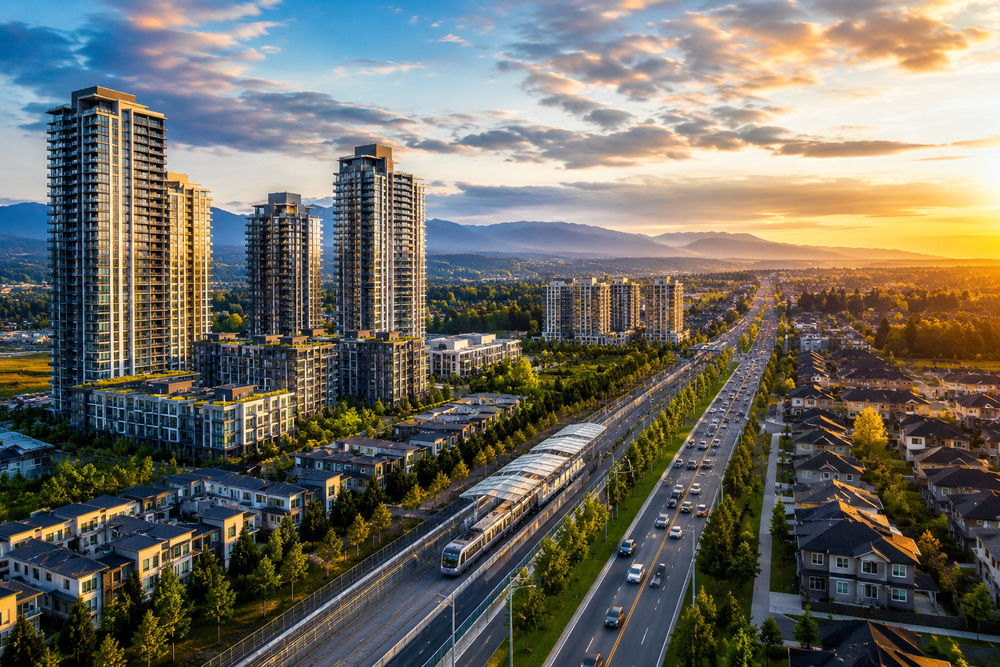
At the center of the discussion is the proposed 200 Street Bus Rapid Transit (BRT) corridor, which is rapidly becoming the backbone of future development plans in both Brookswood-Fernridge and Willoughby. Council agendas and planning updates over the past month reveal a municipality aggressively positioning itself for massive population growth, denser housing, and transit-oriented development.
But behind the glossy vision of walkable communities and modern transit lies an increasingly heated debate: can infrastructure keep pace with growth?
Council recently advanced major bylaw readings tied to updated community plans for Brookswood-Fernridge and Willoughby. The proposals include significant policy and mapping changes designed to support higher-density housing near future BRT stations.
One of the most controversial changes involves parking reductions for one-bedroom apartments near future transit hubs. Township zoning amendments now allow developers to reduce parking requirements by 15% within expanded BRT station radiuses. Supporters argue the move encourages transit use and affordability, while critics worry existing traffic congestion is already reaching a breaking point.
Willoughby, in particular, has become ground zero for the debate.
The area has transformed from suburban farmland into one of the fastest-growing communities in British Columbia. Updated planning documents indicate population projections could eventually double current levels as development intensifies along the transit corridor.
Councillors and residents alike are increasingly voicing concerns over whether schools, fire halls, recreation facilities, and roads can realistically keep up.
Infrastructure pressure is already visible. Road expansion projects like the ongoing 80 Avenue widening highlight how transportation upgrades are racing to catch existing demand, before another wave of density even arrives.
At the same time, provincial housing legislation continues forcing municipalities across BC to accommodate more density through Small-Scale Multi-Unit Housing (SSMUH) policies. In Brookswood-Fernridge, several neighbourhood plans are already being revised to align with those provincial mandates.
For investors, developers, and homeowners, the stakes are enormous.
Transit-oriented development typically drives long-term property appreciation, higher land values, and stronger rental demand. Yet rapid growth without synchronized infrastructure investment can also create traffic bottlenecks, strained public services, and community backlash that slows future approvals.
The Township of Langley now finds itself balancing two competing realities: the urgent provincial demand for more housing and the equally urgent local demand for livable communities.
What happens next along the 200 Street corridor may ultimately become one of the defining real estate stories in British Columbia.
And for those watching the Fraser Valley market closely, the message is clear, Langley is no longer planning for growth.
It’s preparing for transformation.
Debbie Balfour | Real Estate Investing Success Coach + Podcast Host
📍 Website: www.DebbieBalfour.com
📧 Email: Debbie@DebbieBalfour.com
🔗 LinkedIn: Debbie Balfour
▶️ YouTube Channel: youtube.com/@DebbieBalfour
Join the FREE Facebook Group: Real Estate Investor Success Hub
Download your FREE 7 Proven Ways To Invest In Real Estate Without Using Your Own Cash guide.
TAGS: #Township of Langley #Willoughby BC #Brookswood Fernridge #Transit Oriented Development #BC Real Estate #Langley BC #Langley News #Debbie Balfour