✍️ By Debbie Balfour | Langley News | June 30, 2026

The Other Real Estate Market Few People Talk About

When people discuss real estate in Langley, the conversation usually focuses on houses, condos, and townhomes.

But behind the residential market is another sector quietly shaping the community's economic future: commercial real estate.

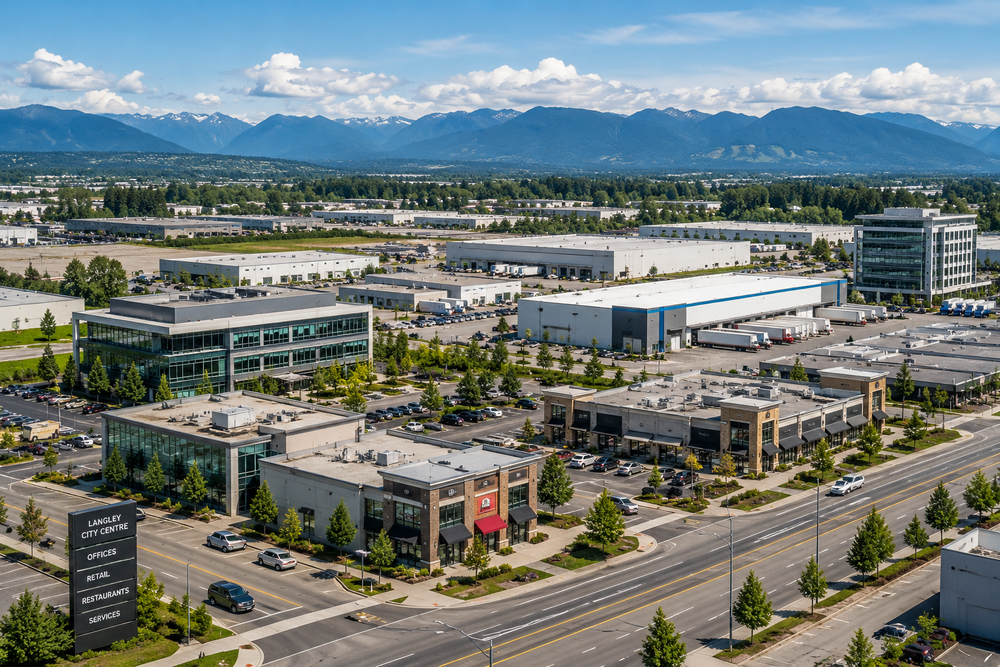
From industrial warehouses and logistics facilities to office buildings, retail centres, and mixed-use developments, commercial properties play a critical role in attracting businesses, creating jobs, and supporting long-term economic growth.

And right now, Langley's commercial real estate market is undergoing significant change.

Industrial Remains the Star Performer

Among all commercial property types, industrial real estate continues to be the strongest segment.

Langley's strategic location along Highway 1, proximity to the U.S. border, access to Metro Vancouver, and growing transportation infrastructure have made it an increasingly attractive destination for warehousing, logistics, manufacturing, and distribution businesses.

Areas such as Gloucester, Campbell Heights, and portions of Northwest Langley continue to attract industrial investment because available industrial land remains scarce throughout the Lower Mainland.

For many investors, industrial properties remain one of the most sought-after commercial asset classes due to strong tenant demand and historically low vacancy rates.

Retail Is Adapting Rather Than Disappearing

The retail sector has experienced significant change over the past decade.

Online shopping has altered consumer behaviour, forcing retailers to rethink how physical stores operate. Yet contrary to predictions that retail would disappear, many Langley shopping areas remain active and well occupied.

Neighbourhood retail centres, grocery-anchored developments, restaurants, personal services, and entertainment businesses continue to perform relatively well because they provide experiences and services that cannot easily be replaced online.

Major commercial corridors such as Fraser Highway, 200 Street, and the Willowbrook area continue to attract both local and national retailers.

However, retail landlords face increasing pressure to create destinations rather than simply lease storefronts.

The Office Market Continues to Evolve

Office space remains one of the most discussed sectors in commercial real estate.

The rise of remote and hybrid work has forced employers to reassess their space requirements. While downtown Vancouver office markets have faced challenges, suburban office locations such as Langley have experienced a somewhat different dynamic.

Some businesses are choosing suburban locations closer to where employees live, reducing commuting times and overhead costs.

At the same time, tenants are becoming more selective, often preferring newer, higher-quality office space with modern amenities.

The Impact of the Surrey-Langley SkyTrain

One factor that could significantly influence commercial real estate over the next decade is the Surrey-Langley SkyTrain extension.

Transit-oriented development often attracts higher-density residential, office, retail, and mixed-use projects near stations.

Many investors, developers, and business owners are closely watching future station areas, particularly around Willowbrook and Langley City, where redevelopment opportunities may emerge as transit infrastructure expands.

The full economic impact remains uncertain, but few would dispute that transit investments have the potential to reshape commercial development patterns.

Challenges Remain

While opportunities exist, challenges remain.

Higher borrowing costs, construction inflation, labour shortages, development fees, and lengthy approval processes continue to impact commercial projects.

Many developers and business owners argue that municipal approval timelines and rising infrastructure costs have become major obstacles to bringing new commercial space to market.

Others counter that careful planning is necessary to ensure growth remains sustainable and does not place excessive pressure on infrastructure and public services.

Looking Ahead

Langley's commercial real estate market is no longer defined by a single story.

Industrial properties continue to drive investment. Retail is evolving to meet changing consumer preferences. Office space is adapting to new workplace realities. Transit-oriented development is creating new g.

The question is not whether Langley will continue to grow—it almost certainly will.

The bigger question is whether commercial real estate can keep pace with the demands of a rapidly expanding community while remaining affordable and attractive for businesses, investors, and entrepreneurs.

As Langley positions itself for the next decade of growth, commercial real estate may become one of the most important indicators of the community's long-term economic success.


Debbie Balfour | Real Estate Investing Success Coach + Podcast Host
📍 Website: www.DebbieBalfour.com
📧 Email: Debbie@DebbieBalfour.com
🔗 LinkedIn: Debbie Balfour
▶️ YouTube Channel: youtube.com/@DebbieBalfour

Join the FREE Facebook Group: Real Estate Investor Success Hub

Download your FREE 7 Proven Ways To Invest In Real Estate Without Using Your Own Cash guide.

TAGS: #Commercial Real Estate #Langley Business #Industrial Real Estate #Economic Development #Real Estate Investing #Langley BC #Langley News #Debbie Balfour

Share this article
The link has been copied!