Karalee Greer | Langley.news | September 3, 2025                                     

Langley and Fort Langley: A Shared Past, Distinct Identities

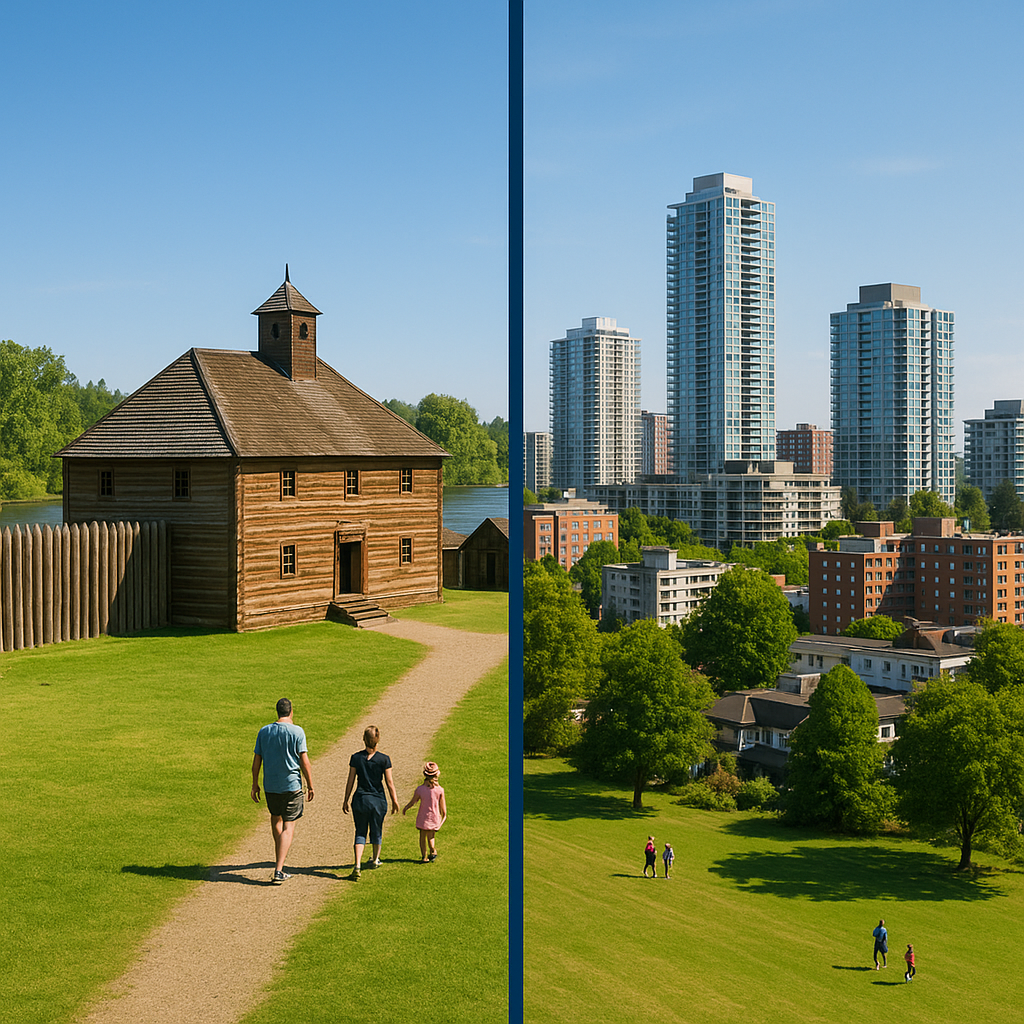
Nestled in the heart of British Columbia’s Fraser Valley, Fort Langley and the City of Langley share a common history yet retain distinct identities that shape their roles today. Their relationship is one of origin and evolution—rooted in colonial beginnings and expanded into modern urban development.

The Birthplace of British Columbia

Fort Langley, founded in 1827 by the Hudson’s Bay Company, was a fur trading post along the Fraser River. Its strategic location allowed it to become a hub of commerce, agriculture, and cultural exchange with Indigenous peoples, particularly the Kwantlen First Nation. It was at Fort Langley in 1858 that the proclamation was read declaring the Colony of British Columbia, earning it the title “Birthplace of B.C.”

This historical significance means Fort Langley has always held a symbolic and cultural weight greater than its small population suggests. Today, it thrives as a heritage village, drawing tourists with its preserved buildings, national historic site, boutique shops, and thriving arts scene.

The Growth of Langley

While Fort Langley remained a small village with a heritage focus, the surrounding region grew rapidly. In 1873, the Township of Langley was incorporated, encompassing Fort Langley within its boundaries and stretching across a large swath of farmland, residential neighbourhoods, and rural communities. Later, in 1955, the City of Langley separated from the Township, establishing itself as a more urbanized, commercially driven hub.

The City became the economic and cultural center for the broader Langley area, with shopping districts, schools, and transportation links serving a growing population. Meanwhile, Fort Langley maintained its intimate, historic charm—a reminder of where it all began.

Interconnected Futures

Though distinct, Fort Langley and Langley remain deeply interconnected. Residents of the City and Township often spend weekends in Fort Langley, visiting the farmers market, walking along the Fraser River, or attending community festivals. Conversely, Fort Langley benefits from Langley’s infrastructure, retail economy, and growing population, which fuels tourism and local business.

Both areas also share governance ties through the Township of Langley, which manages Fort Langley as part of its jurisdiction. This ensures that decisions around land use, heritage preservation, and community development remain aligned with the broader needs of Langley residents.

Conclusion

The story of Fort Langley and Langley is one of shared roots and evolving identities. Fort Langley provides the historical heart and cultural richness, while the City and Township of Langley supply the energy of modern growth. Together, they form a partnership where past and present coexist, creating a community that celebrates its heritage while embracing its future.

Editor: Karalee Greer

Tags: #Langley BC #Fort Langley #Fraser Valley #Karalee Greer #BC History

Share this article
The link has been copied!