✍️ By Debbie Balfour | Langley News | June 26, 2026

The Infrastructure Nobody Notices Until It's Needed

Most people rarely think about dikes, drainage systems, or flood protection infrastructure until a major storm arrives.

When heavy rainfall overwhelms rivers, streams, and drainage systems, communities quickly discover the value of investments that are often hidden from view. Across British Columbia and the Fraser Valley, recent extreme weather events have highlighted the vulnerability of communities to flooding, raising important questions about preparedness and resilience.

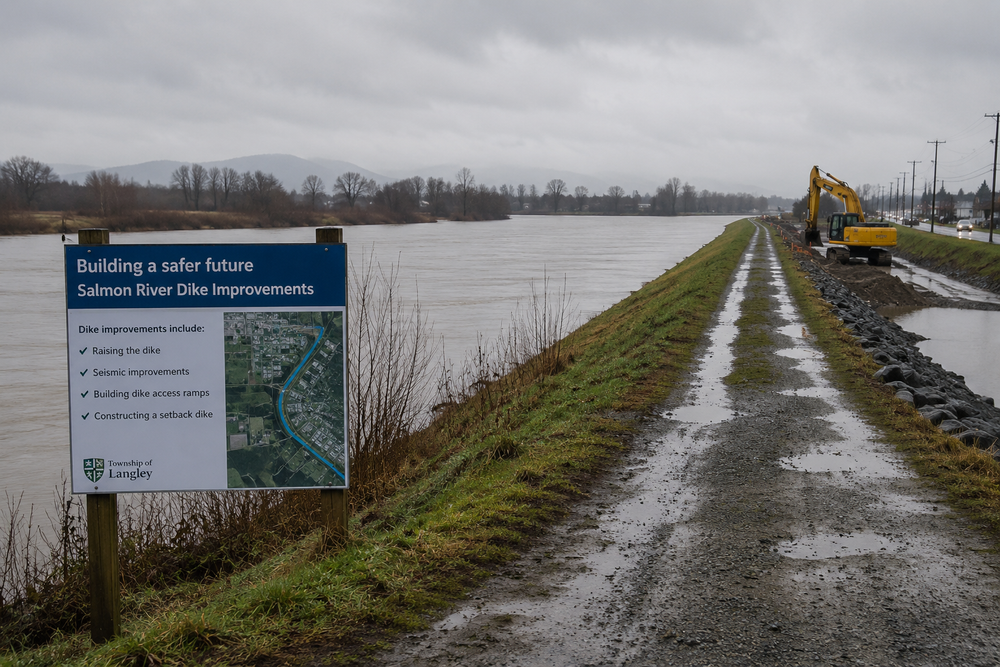
In Langley, planned upgrades to portions of the Salmon River Dike system and ongoing flood management initiatives are drawing increased attention as climate-related risks continue to evolve. While these projects may not generate the same excitement as new roads or transit investments, they could prove equally important to the community's long-term future.

Why Flood Protection Matters More Than Ever

Climate experts increasingly warn that future weather patterns may bring more intense rainfall events and greater pressure on flood management systems.

For communities like Langley, the risks extend far beyond temporary inconvenience.

Flooding can damage homes, businesses, agricultural lands, transportation corridors, utilities, and critical infrastructure. Recovery costs can quickly reach millions of dollars, while insurance claims, business interruptions, and property damage can impact families for years.

Areas throughout the Fraser Valley have already experienced firsthand how severe weather events can disrupt entire communities.

As a result, infrastructure once viewed as optional or long-term planning is increasingly being viewed as essential protection.

The Benefits of Investing Before Disaster Strikes

Supporters of proactive flood mitigation argue that prevention is often far less expensive than recovery.

Flood protection projects can help reduce risks to homes and neighbourhoods, safeguard valuable agricultural land, and improve public safety during extreme weather events. Stronger flood management systems can also help maintain transportation networks and protect essential services when communities need them most.

There are economic benefits as well.

Every dollar invested in reducing flood risk may help avoid much larger disaster recovery costs in the future. Communities with resilient infrastructure are often better positioned to recover quickly from major weather events and maintain confidence among homeowners, businesses, and investors.

In a growing region such as Langley, these investments can also help support long-term development and economic stability.

The Cost Debate

Of course, flood protection infrastructure is not free.

Major dike improvements, drainage upgrades, stormwater systems, and climate adaptation projects can require substantial public investment. Municipal leaders must balance these costs against competing priorities such as roads, recreation facilities, transit, housing initiatives, and public services.

Questions inevitably arise about who should pay.

Should local taxpayers shoulder most of the burden? Should provincial and federal governments contribute more? Should development-related growth help fund future climate resilience projects?

Some residents question whether current spending levels are sufficient, while others worry about the financial impact of increasing infrastructure budgets.

What Happens If Investments Are Delayed?

The consequences of underfunding flood protection can be significant.

Aging infrastructure may become less capable of handling increasingly severe weather events. Development pressures can place additional strain on drainage systems. Deferred maintenance may increase long-term repair costs and leave communities more vulnerable when major storms occur.

In many cases, emergency repairs and disaster recovery efforts cost considerably more than proactive planning and prevention.

That reality is driving a broader conversation about how much communities should invest today to reduce future risk.

Looking Beyond the Next Storm

Flood protection is about much more than managing water.

It is an economic issue, a housing issue, an environmental issue, and ultimately a community-planning issue. Decisions made today will influence how well Langley can adapt to future growth and climate challenges.

Supporters of increased investment argue that proactive planning is essential to protect lives, property, and economic stability. Critics caution that infrastructure spending must remain affordable and balanced against other pressing community needs.

Both perspectives raise valid questions.

What remains uncertain is whether today's investments will be enough to meet tomorrow's challenges.

And perhaps that is the question residents should be asking:

If the cost of prevention seems high today, what could the cost of inaction look like twenty years from now?


Debbie Balfour | Real Estate Investing Success Coach + Podcast Host
📍 Website: www.DebbieBalfour.com
📧 Email: Debbie@DebbieBalfour.com
🔗 LinkedIn: Debbie Balfour
▶️ YouTube Channel: youtube.com/@DebbieBalfour

Join the FREE Facebook Group: Real Estate Investor Success Hub

Download your FREE 7 Proven Ways To Invest In Real Estate Without Using Your Own Cash guide.

TAGS: #Flood Protection #Climate Resilience #Infrastructure #Fraser Valley #Real Estate #Langley News #Debbie Balfour

Share this article
The link has been copied!