What New Research Says About Your Daily Cup

Karalee Greer | Langley City News | July 25, 2026
Subscription and being a Contributor to Langley City News is
Free

For decades, coffee has been the subject of conflicting health headlines. One week it's considered beneficial. The next, it's linked to a new health concern.

Recent reports (see sources below) offer a more balanced picture: moderate coffee consumption appears to be safe—and may even benefit heart health—but researchers are also uncovering potential risks that shouldn't be ignored.

The message isn't that coffee is good or bad. It's that how much you drink, how you prepare it, and your own health all matter.

A New Vote of Confidence for Coffee

The American Heart Association (AHA) has released a comprehensive scientific statement reviewing the latest evidence on caffeine and cardiovascular disease.

Its conclusion may surprise many coffee lovers.

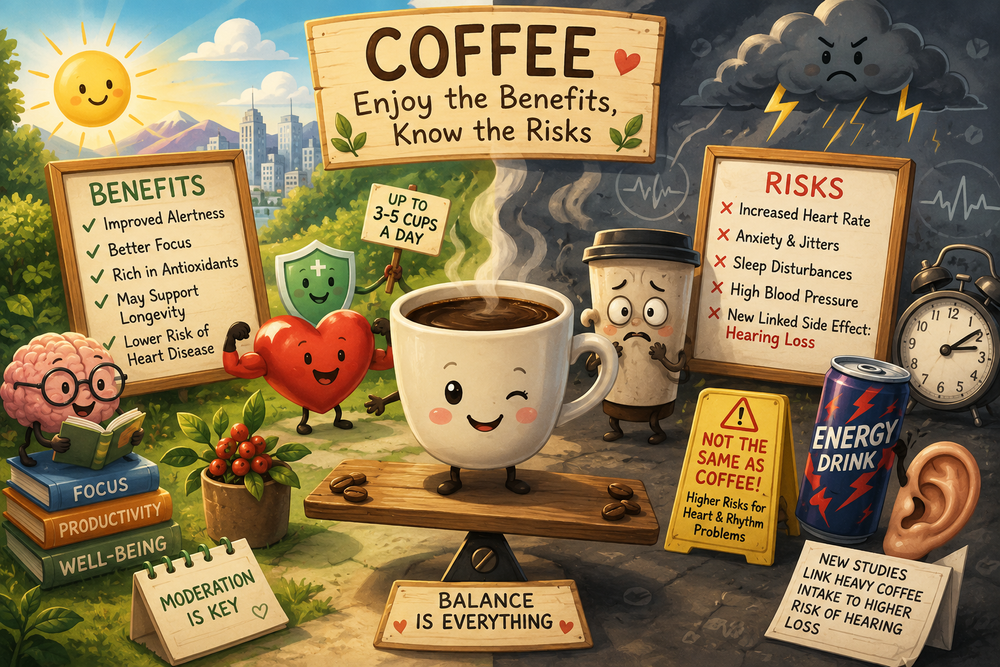
For most healthy adults, consuming up to 400 milligrams of caffeine per day—roughly equivalent to three to five 8-ounce cups of regular brewed coffee—is considered safe and may even be associated with a lower risk of several cardiovascular conditions.

Researchers found moderate coffee consumption was associated with lower risks of:

  • Coronary heart disease
  • Stroke
  • Heart failure
  • Type 2 diabetes
  • Some irregular heart rhythms, including atrial fibrillation

Interestingly, some of these benefits may come from coffee's naturally occurring plant compounds—not caffeine alone.

Not All Coffee Is Equal

The AHA also notes that what goes into your coffee matters.

Black coffee or coffee with minimal additives appears to provide the greatest potential health benefits. Adding large amounts of sugar, flavoured syrups, whipped cream, or high-fat creamers may offset some of those advantages.

Researchers also found differences in brewing methods.

Filtered coffee generally removes cafestol, a naturally occurring compound that can raise LDL ("bad") cholesterol. Unfiltered coffee—such as French press, Turkish coffee, boiled coffee, and some espresso preparations—contains higher levels of cafestol.

Energy Drinks Are a Different Story

One of the strongest messages from the American Heart Association is that coffee should not be compared with energy drinks.

Although both contain caffeine, energy drinks often contain much higher caffeine concentrations, along with ingredients such as taurine and other stimulants.

The evidence reviewed by the AHA suggests these beverages may increase the risk of:

  • High blood pressure
  • Abnormal heart rhythms (arrhythmias)
  • Other cardiovascular complications

Researchers emphasize that evidence supporting moderate coffee consumption should not be applied to energy drinks.

A New Study Raises Questions About Hearing Health

While heart health findings have been encouraging, another recent study has highlighted a possible downside to heavy coffee consumption.

Researchers analyzing health data from a very large population study reported an association between higher coffee intake and an increased risk of hearing-related problems. The study found an association but did not establish that coffee directly causes hearing loss. Additional research will be needed to confirm whether the relationship is causal and to understand the biological mechanisms involved.

As with many nutrition studies, the findings should be viewed as an emerging area of research rather than definitive proof.

Individual Responses Matter

Coffee doesn't affect everyone the same way.

According to the AHA, several factors influence how individuals respond to caffeine, including:

  • Genetics
  • Age
  • Existing medical conditions
  • Pregnancy
  • Regular caffeine intake
  • Certain medications

Some people can comfortably drink several cups each day, while others may experience:

  • Jitters
  • Anxiety
  • Sleep disruption
  • Heart palpitations
  • Temporary increases in blood pressure

Because responses vary so widely, there is no single recommendation that fits everyone.

So…Should You Keep Drinking Coffee?

For most healthy adults, current evidence suggests moderate coffee consumption can remain part of a healthy lifestyle. That doesn't mean more is better.

Experts continue to recommend moderation, particularly for people who:

  • Have uncontrolled high blood pressure
  • Experience heart rhythm disorders
  • Are pregnant
  • Are sensitive to caffeine
  • Consume multiple energy drinks or caffeine supplements

If coffee causes unpleasant symptoms, reducing intake or speaking with a healthcare provider may be appropriate.

Why It Matters

Coffee remains one of the world's most studied beverages, and the latest evidence is largely reassuring.

For most adults, enjoying a few cups of coffee each day appears unlikely to harm the heart and may even provide health benefits. At the same time, new research reminds us that no single food or drink is entirely risk-free, and scientists continue to learn more about coffee's effects on different parts of the body.

As with many aspects of nutrition, moderation—and paying attention to your own body's response—remains the best advice.

Karalee Greer | Langley City News
LinkedIn:
 https://www.linkedin.com/in/karalee/
Subscription and being a Contributor to Langley City News is Free

Tags: #Karalee Greer #Coffee #Heart Health #Nutrition #Healthy Living #Medical Research #Caffeine #Langley City News

Sources

  • American Heart Association – Caffeine and Cardiovascular Disease Scientific Statement (2026)
  • Circulation (American Heart Association Journal)
  • MSN Health reporting on the American Heart Association scientific statement
  • MSN Health reporting on the recent hearing-health study
Share this article
The link has been copied!